
Common SoCal Pond Water Problems and Their Solutions
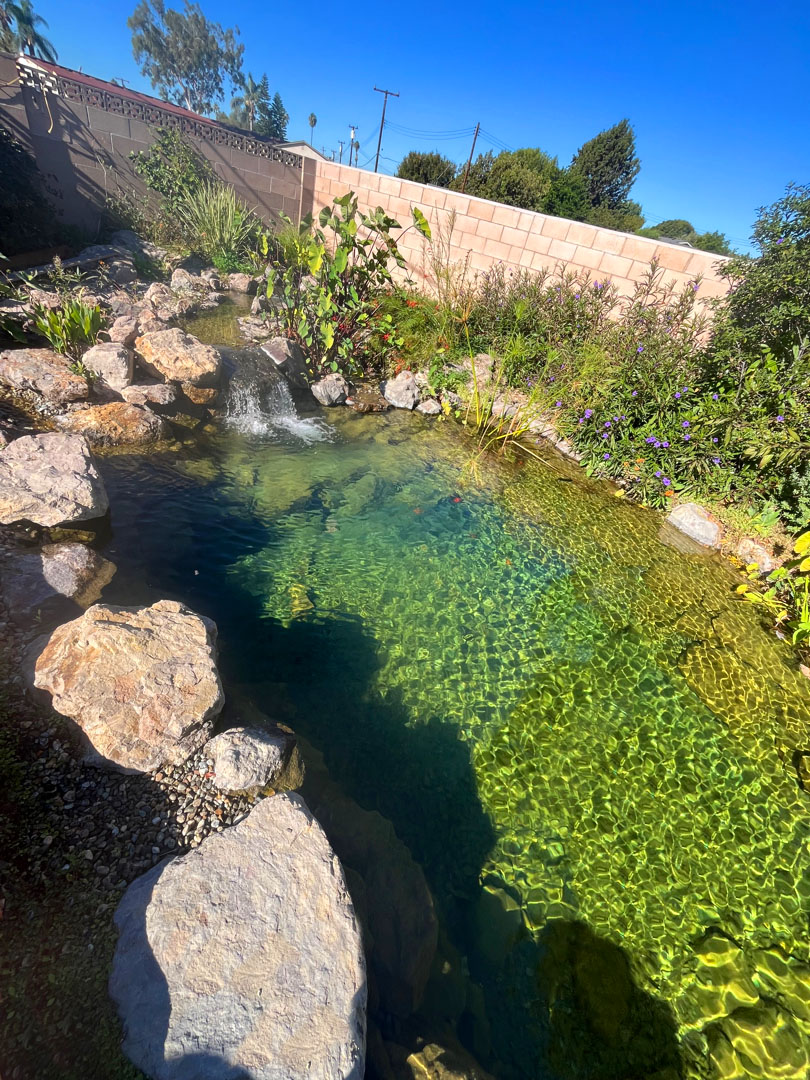
A backyard pond should be a place where you can relax, watch your fish, and enjoy the sound of moving water. However, ponds are living ecosystems, and their appearance can change throughout the year.
Pond owners in Anaheim, Irvine, Santa Ana, Huntington Beach, Newport Beach, Costa Mesa, Mission Viejo, San Clemente, and other Southern California communities may occasionally notice algae, cloudy water, or debris collecting at the bottom.
These problems do not always mean something is seriously wrong. Most pond water concerns can be improved by finding the cause and restoring the pond’s natural balance.
What Keeps Pond Water Healthy?
Clear, healthy pond water depends on more than one piece of equipment. The entire pond ecosystem must work together as one system.
A well-built ecosystem pond usually includes:
● A skimmer or other mechanical filter that collects leaves and floating debris
● Biological filtration that helps process fish waste and other organic material
● A properly sized pump that keeps water moving
● Waterfalls, fountains, or aeration that add oxygen
● Aquatic plants that provide shade and absorb nutrients
● Beneficial bacteria that naturally break down waste
● Rocks and gravel that provide a place for helpful bacteria to grow
When one part of this system is not working properly, water quality problems can begin to appear.
This is especially true in warm areas such as Yorba Linda, North Tustin, Irvine, Corona, and Orange, where ponds may receive strong sunlight for much of the year.
Routine professional pond maintenance helps ensure each part of the ecosystem continues working together as intended.
Why Is My Pond Water Cloudy?
Cloudy pond water can have several different causes. The color and appearance of the water can help identify what may be happening.
Green Pond Water
Water that looks green is usually caused by tiny algae particles floating in the pond. This is sometimes called suspended algae.
Green water is common during seasonal changes, especially when the weather warms before pond plants have started growing actively. Sunlight and extra nutrients allow the algae to spread quickly.
Proper filtration, beneficial bacteria, aquatic plants, a correctly installed ultraviolet clarifier, and regular monitoring by a pond professional all play an important role in controlling green pond water and maintaining a healthy pond ecosystem.
Brown or Tea-Colored Water
Brown water often develops when leaves, mulch, pollen, or other plant material enters the pond. As this material breaks down, it can release natural compounds called tannins that discolor the water.
While removing debris and performing a partial water change may help, it is often more involved than many homeowners expect, but a pond professional can handle the process safely while ensuring the pond ecosystem is properly protected.
It is also important to keep nearby landscape material from washing into the pond during watering or rain.
This can be especially helpful for ponds surrounded by mature landscaping in areas such as Fullerton, Santa Ana, Orange, and Long Beach
Milky, White, or Gray Water
Milky or gray water may be caused by fine dirt particles, poor filtration, or a temporary increase in bacteria. It can happen after a pond cleaning, construction near the pond, or a heavy rainstorm.
In many cases, allowing the filtration system time to stabilize will naturally improve water clarity. If the condition persists, a professional inspection can help identify the underlying cause.
How to Manage Pond Algae
A small amount of algae is normal in a healthy pond. Algae can even provide a natural food source for fish and other pond life.
It becomes a concern when it covers the rocks, clogs the waterfall, or turns the entire pond green.
Algae usually grows quickly when it has three things:
● Plenty of sunlight
● Extra nutrients in the water
● Too few pond plants to compete with it
Southern California’s sunny weather can make algae control an ongoing concern for pond owners in Fountain Valley, Garden Grove, Westminster, Seal Beach, and Long Beach.
Natural Ways to Reduce Algae
The goal is not to remove every trace of algae. The goal is to keep it under control.
You can help limit excessive algae by:
● Adding waterlilies and other aquatic plants
● Providing shade over part of the pond
● Feeding fish only what they can quickly eat
● Removing leaves and dying plant material
● Cleaning filters as needed
● Keeping the pump and waterfall running properly
● Adding aeration when oxygen levels are low
● Using beneficial bacteria regularly
Regular professional maintenance helps keep filtration systems operating efficiently and catches small issues before they become larger algae problems.
Pond-safe treatments may also help with string algae or green water. However, treatments usually work best when the pond also has proper filtration, circulation, and plant coverage.
Repeated algae problems are often a sign that something else in the ecosystem needs attention.
What Causes Sludge on the Pond Bottom?
Sludge is the dark, soft material that collects between rocks and along the bottom of a pond. It is made from decomposing leaves, pollen, fish waste, leftover fish food, and dying plant material.
A thin layer of organic material is normal. A heavy buildup can cause odors, lower water quality, and provide additional nutrients for algae.
Warm temperatures can cause organic debris to break down more quickly. This makes regular pond care especially important in communities such as Laguna Beach, Dana Point, Ladera Ranch, Laguna Niguel, Brea, and San Juan Capistrano.
How to Reduce Pond Sludge
The easiest way to control sludge is to stop large amounts of debris from collecting in the first place.
Professional routine maintenance helps remove excess debris before it has a chance to settle to the bottom of the pond and decompose.
Beneficial bacteria and pond-safe sludge-reducing treatments can help break down organic waste naturally when applied in the proper amounts by a pond professional. While these treatments support a healthy ecosystem, they cannot remove years of accumulated sludge. That’s why annual drain and cleans are an important part of long-term pond health, allowing built-up organic debris to be safely removed before it impacts water quality, filtration, and the overall balance of the pond.
Avoid Quick Fixes That Do Not Address the Cause
When pond water changes color, it can be tempting to add several treatments at once.
This may provide a temporary improvement, but it does not always correct the underlying cause of the problem.
Before treating the water, it’s important to determine what is causing the imbalance:
● Is the pump running properly?
● Is the filter clogged or undersized?
● Is there enough water movement?
● Are too many fish living in the pond?
● Are the fish being overfed?
● Is debris collecting in the water?
● Does the pond have enough plants?
● Is runoff entering the pond from the surrounding yard?
Finding the cause helps prevent the same problem from returning.
Healthy Ponds Change With the Seasons
A pond does not need to look exactly the same every day to be healthy. It is a natural environment that responds to sunlight, temperature, plant growth, fish activity, wind, and seasonal debris.
A brief algae bloom or period of cloudy water is not always a reason to worry. The pond may simply need time and a little extra help to return to balance.
The best ponds are not sterile. They are balanced environments where fish, plants, filtration, rocks, gravel, moving water, and beneficial bacteria all work together to create a healthy, thriving water feature.
Professional Pond Care in Orange County and Surrounding Areas
If your pond remains cloudy, develops heavy algae, or continues collecting sludge, AquaLife Ponds can find the root cause and create a treatment plan for the best solution.
We work with pond owners throughout Anaheim, Santa Ana, Irvine, Orange, Tustin, Costa Mesa, Newport Beach, Huntington Beach, Yorba Linda, Fullerton, Mission Viejo, Lake Forest, Laguna Niguel, San Clemente, San Juan Capistrano, Dana Point, Rancho Santa Margarita, Corona and surrounding Southern California communities.
Whether your pond needs maintenance, filtration improvements, better circulation, algae control, or a complete renovation, AquaLife Ponds can help you create a cleaner, healthier, and more enjoyable water feature that you can enjoy year-round.