
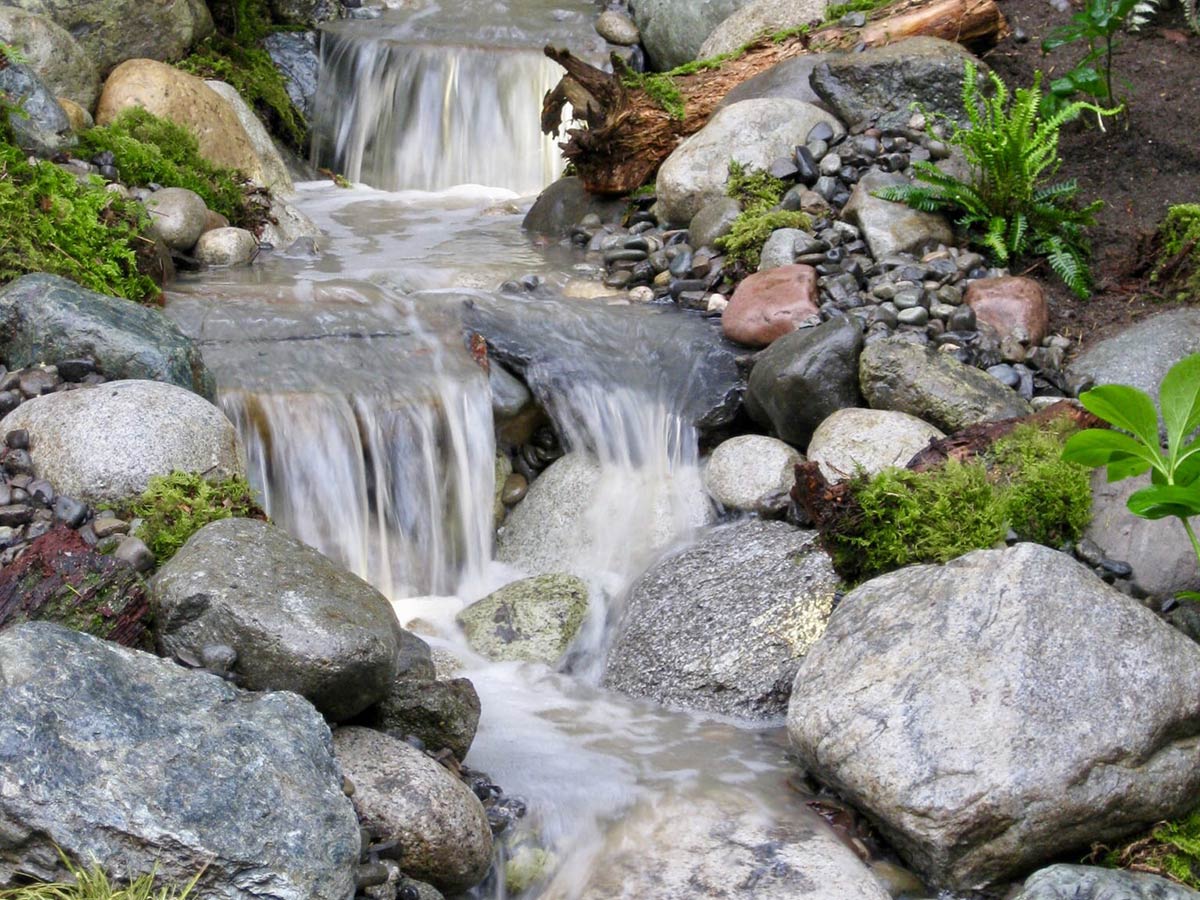
How do I keep my pondless waterfall clean?
Dry and warm weather make water features a welcome addition in Southern California homes.
A pondless waterfall is popular among homeowners as it’s low-maintenance. In general, it’s a waterfall without a pond and is a great option for families with small children, concerned about safety, or those who want an easy-care fixture.
The water in a pondless fountain is never stagnant. But when not cleaned, dirt can accumulate, and it can stink or even dry out. You want to avoid this as much as possible. Your waterfall should bring enjoyment, like these featured projects, and not turn into an eyesore.
So, is it hard to clean pondless water features?
The longer your water feature goes without cleaning, the more likely the water quality will diminish. This can make your stones appear slimy as algae accumulate over them.
Cleaning can be tedious without prior experience or the longer you wait until finally doing it. That’s why it helps to hire a professional pond maintenance service provider in SoCal.
Here’s an overview of the steps involved in cleaning a pondless water feature.
1. Removing debris
You can use a pressure cleaner to remove sediments and organic materials from the pondless waterfall. Organic materials are food for algae. Get rid of them to starve and keep algae from building up.
You may also use a brush to scrape off algae and sediments on rocks. You can take out the rest of the other debris, such as sticks, by hand.
Pay attention to the stones nearest your pump or where the water flows over the last. Be sure there’s no debris on them to prevent blockage.
Keep these things in mind as you remove debris from your water feature:
- Differentiate green creatures. Not all green stuff on stones and rocks is algae. They could be moss. Moss can be left alone as they make your water feature look natural. But if you still want them removed, you can use your hands or a pressure cleaner.
- Focus on algae control. When cleaning your pondless waterfall, think about algae control. Algae will naturally build up if organic material, moisture, and sunlight are present. But you can keep them from accumulating.
- Check out spaces between stones. Stones of different sizes and shapes make for crevices or tight spaces where debris can collect. Look for these spots and remove the materials you see. Debris accumulation can clog your system and keep water from recirculating properly.
2. Checking for evaporation and leaks
It’s hard to see how much water you’ve lost as the reservoir is beneath the soil.
Aside from evaporation, another potential reason you may be losing water in your custom water features is overflow. Even if you have arranged your pond edges with care, it’s still possible for the water to splash or flow over the edge.
The stones can settle, which can then affect the structure of the edges. If the waterfall is high, there are higher chances of the water splashing out. The same goes if there are plants around its perimeter where water can bounce off and not be redirected back.
Is your waterfall or stream directly under the sunlight? If yes, it’s more vulnerable to evaporation. High winds can also lead to a quick loss of water in your fixture.
See if there’s wet soil around your edges as that can indicate water leaking out. If the water doesn’t recirculate, your pond will stop working.
There’s not much you can do about the position of your waterfall and the external conditions it’s exposed to. But you can be proactive in checking the water level.
Consider investing in a pond autofill device to automatically add water when the level goes down.
3. Finding the source of the leak
Don’t tear down your water feature. Try these steps to identify the source of the leak.
- See if water isn’t spilling out from the spillway.
- Check the tubing for any loose or damaged parts carefully. Watch out for wet or moist spots.
- Turn off your water feature and check the water level at the basin. Come back again the next day if the level has changed. If it has, then the problem isn’t on your tubing or spillway. It could be on the waterfall itself.
- If the water level has decreased, it may be due to a damaged pond liner or basin. Don’t turn on your system yet. Wait until the water level stops dropping. The leak is most likely around that spot.
If you’re unsure about fixing a damaged liner or basin, contact your pond builder for professional help. This way, they can also recheck your waterfall for potential issues and keep them from happening again.
4. Refilling and changing the water
Pondless waterfalls require a lot less water to operate and maintain. But even so, They aren’t immune to evaporation. They’re even more vulnerable as the water can dry out faster due to several factors.
They’re usually refilled at least once a week to keep them from drying out completely. And more frequently when the weather gets too hot.
If they dry up, your pump can be damaged. Refilling or changing out the water regularly also helps prevent algae and organic material from building up.
5. Inspecting equipment
Inspecting equipment is paramount to keeping your water feature in good condition.
As you clean your pondless waterfall, also check its components to ensure everything is working perfectly. This is why seeking assistance from your pond builder helps. They can inform you of any potential issues.
They can also recommend upgrades or changes that can increase system efficiency and help you save on electricity or maintenance.
Avoid cleaning your waterfall without consulting with your installer. Be sure you’re using the right equipment and methods.
You don’t want to damage your water fixture. Or cause more harm than good.
Regular pondless water feature maintenance goes a long way
No water feature is guaranteed maintenance-free. But a pondless waterfall is the closest to that. Still, it needs some level of care.
To summarize, here are the steps in cleaning pondless water features.
- Removing debris
- Checking for evaporation and leaks
- Finding the source of the leak
- Refilling and changing the water
- Inspecting equipment
Do you have more questions about keeping a pondless waterfall clean and clear? Or do you need help restoring your water feature? Perhaps you’re thinking of upgrading it. Or have been considering a customised outdoor pond to complement your retaining wall or hardscapes.
We’re happy to help. Our team is passionate about creating water features that complement your lifestyle and bring long-term bliss. We’re a professional landscape designer and pond builder, repair, and maintenance company in Southern California. Contact us today at (949) 244-8164. Let’s schedule a visit as soon as possible to restore your water feature.